



Cloud Integration for Legacy Systems That Works
A lot of modernization projects stall for the same reason: the systems still running payroll, inventory, finance, manufacturing, or customer operations were never built for cloud-native environments. They are stable, business-critical, and often deeply customized. That is exactly why cloud integration for legacy systems needs a disciplined approach. The goal is not to rip out what still works. The goal is to connect, secure, and extend it without creating new operational risk.
For small and mid-sized businesses, that distinction matters. A full replacement sounds clean on paper, but in practice, it can mean retraining teams, rewriting workflows, and accepting downtime that the business cannot absorb. Integration gives leaders a more practical path. It allows the organization to modernize in stages while preserving the systems that still hold essential business logic.
What cloud integration for legacy systems actually means
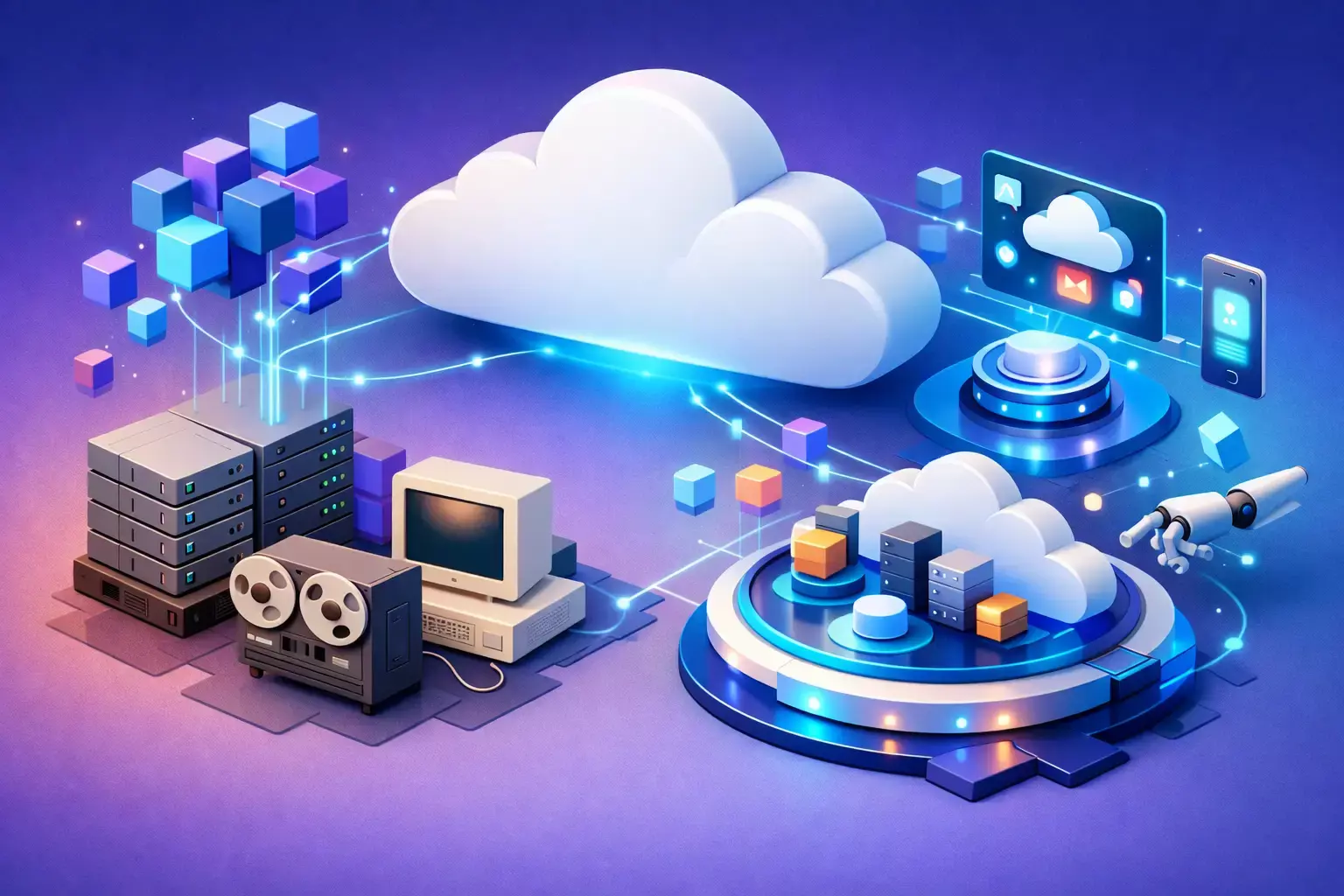
At its core, cloud integration connects older applications, databases, and on-prem infrastructure with cloud services so data, workflows, and operations can move across both environments reliably. That may involve syncing data between an ERP and a cloud analytics platform, exposing selected functions through APIs, connecting identity and access controls, or moving reporting, backups, and monitoring into the cloud while the main application remains in place.
This is rarely a single technology decision. It is usually an architecture decision that touches networking, security, observability, automation, and compliance. In some cases, the right move is a lightweight integration layer that lets the legacy application keep running with minimal changes. In others, it makes sense to rehost part of the stack in AWS, containerize supporting services, or build middleware that translates between older protocols and modern APIs.
The right answer depends on the age of the system, the quality of documentation, performance requirements, and how much change the business can tolerate at once.
Why businesses choose integration before replacement
There is a reason many experienced IT leaders start with integration rather than a complete rebuild. Legacy systems often contain years of embedded rules, exceptions, and workflow logic that are not captured anywhere except in the application itself. Replacing that all at once is expensive and risky.
Integration creates room to improve operations without forcing a full reset. Teams can centralize logs, strengthen disaster recovery, improve reporting, add security controls, and connect data to newer applications. They can also reduce dependence on ageing infrastructure by shifting surrounding services into managed cloud environments.
That does not mean integration is the easy option. Poorly planned cloud integration for legacy systems can create a fragile hybrid environment with duplicated data, inconsistent access controls, and support gaps between internal teams and vendors. The value comes from designing around those risks from the start.
The most common integration challenges
- The first challenge is visibility. Many legacy platforms were implemented years ago, modified over time, and left with limited documentation. Before any integration work begins, teams need a clear inventory of applications, dependencies, interfaces, data flows, and operational owners. Without that, the project quickly becomes guesswork.
- The second challenge is compatibility. Older systems may rely on outdated operating systems, proprietary databases, fixed network assumptions, or batch-based workflows that do not align with real-time cloud services. Integration can still work, but it may require middleware, data transformation, scheduled synchronization, or custom connectors rather than direct native integration.
- Security is another major factor. Legacy applications were often designed for a trusted internal network, not for distributed access, cloud identity policies, or modern threat models. Exposing these systems without tightening authentication, segmentation, encryption, and monitoring can increase risk instead of reducing it.
- Then there is performance. Some workloads are sensitive to latency, especially if they depend on frequent read and write operations between on-prem systems and cloud-hosted services. In those cases, architecture choices around connectivity, caching, placement, and traffic patterns matter as much as the integration method itself.
A practical approach to cloud integration for legacy systems
The most effective projects usually start with business priorities, not technology preferences. If the main goal is better reporting, the integration strategy may focus on data replication into a cloud warehouse.
- If the priority is resilience, the first step may be cloud-based backup, disaster recovery, and infrastructure monitoring. If the issue is application sprawl, API enablement and identity consolidation may come first.
- From there, assessment and architecture design should happen together. Teams need to evaluate system dependencies, change windows, compliance obligations, and failure scenarios before choosing tools. This is where experienced cross-platform engineering matters. A legacy Windows application tied to SQL Server has a different path than a custom Linux-based system with direct hardware dependencies.
- In many environments, phased execution is the safest model. Rather than moving the core system immediately, organizations integrate lower-risk components first. They may centralize logs with an observability platform, automate infrastructure changes with Terraform or Ansible, and establish secure network connectivity to AWS. Once the foundation is stable, they can integrate data services, user access, backup workflows, and selected application functions.
This staged model gives teams time to validate performance, catch edge cases, and prove business value before touching the most sensitive components.
Where AWS and automation fit
AWS is often a strong fit for these projects because it supports multiple modernization paths at once. A business can keep a legacy application in place while using cloud services for storage, backup, security controls, monitoring, analytics, or development environments. That flexibility matters when a clean migration is not realistic yet.
- Automation is just as important. Hybrid environments get complicated quickly if they are managed manually. Infrastructure as code, configuration management, and CI/CD practices help standardize changes, reduce drift, and make recovery more predictable. They also create documentation through execution, which is valuable when the legacy environment itself is not well documented.
- Observability deserves equal attention. Once legacy and cloud systems are connected, teams need to see what is happening across both. Metrics, logs, traces, and alerting should not live in separate silos. If a cloud API slowdown affects an on-prem application, or a database issue creates downstream sync failures, operations teams need one view of the problem. Tools like New Relic can help close that gap, but only if instrumentation and alert thresholds are designed with the actual business workflow in mind.
Security and compliance cannot be added later
For many organizations, the real risk in legacy modernization is not technical failure. It is exposing sensitive systems without updating the surrounding controls. Integration should include identity strategy, least-privilege access, encrypted data flows, network segmentation, vulnerability management, and auditability from day one.
This is particularly important for businesses operating under compliance requirements.
- Whether the concern is customer data, financial records, or regulated workloads, cloud integration changes the control surface.
- Logs need retention policies.
- Access events need review.
- Backup and recovery processes need testing.
- Security architecture has to account for both old and new components, not just the cloud layer.
A Well-Architected review mindset helps here. Instead of treating integration as a narrow connectivity task, it frames the work around operational excellence, security, reliability, performance efficiency, and cost optimization. That perspective leads to better decisions than simply asking whether two systems can talk to each other.
How to tell if your legacy environment is ready
Readiness does not mean the system is modern. It means the business understands enough about it to change it safely. That includes knowing which processes are mission-critical, what downtime is acceptable, who owns each application, how data moves, and which integrations already exist.
It also means leadership is aligned with the outcome. If one team expects a full migration while another expects minimal changes, the project will struggle. A clear scope is a major success factor in cloud integration for legacy systems because hybrid environments naturally evolve. Without discipline, a short-term bridge can turn into a long-term source of complexity.
This is where working with a single technical partner can make a measurable difference. Integration touches infrastructure, security, automation, and support operations. When those areas are split across too many vendors, accountability gets blurry. A partner like Advanced Vision IT can help design the architecture, implement the controls, monitor the environment, and support the system after go-live, which reduces friction once the project moves from planning into day-to-day operations.
Modernization does not always start with replacement. In many cases, the smarter move is to stabilize what you have, connect it with intention, and build a platform that gives the business more options next year than it has today.

Written by Yavor Y. Zlatev
CEO & Founder at Advanced Vision IT Ltd | Published on
Yavor advises executive leadership teams on cybersecurity strategy, NIS2 compliance, and cloud operating models to build resilient IT environments.