



How to Choose Application Performance Monitoring Tools
A slow checkout page during peak traffic is not just a technical issue. It is lost revenue, frustrated users, overloaded support teams, and a leadership problem by the end of the day. That is why application performance monitoring tools matter. They give teams the visibility to spot degradation early, understand where it starts, and fix it before performance issues turn into outages or customer churn.
For growing businesses, the challenge is rarely whether monitoring is needed. The real question is which platform will actually help your team operate better across cloud services, APIs, containers, legacy workloads, and third-party dependencies. Many tools promise complete visibility. Fewer deliver a practical signal-to-noise ratio, useful context, and an implementation model your team can sustain.
What application performance monitoring tools should actually do
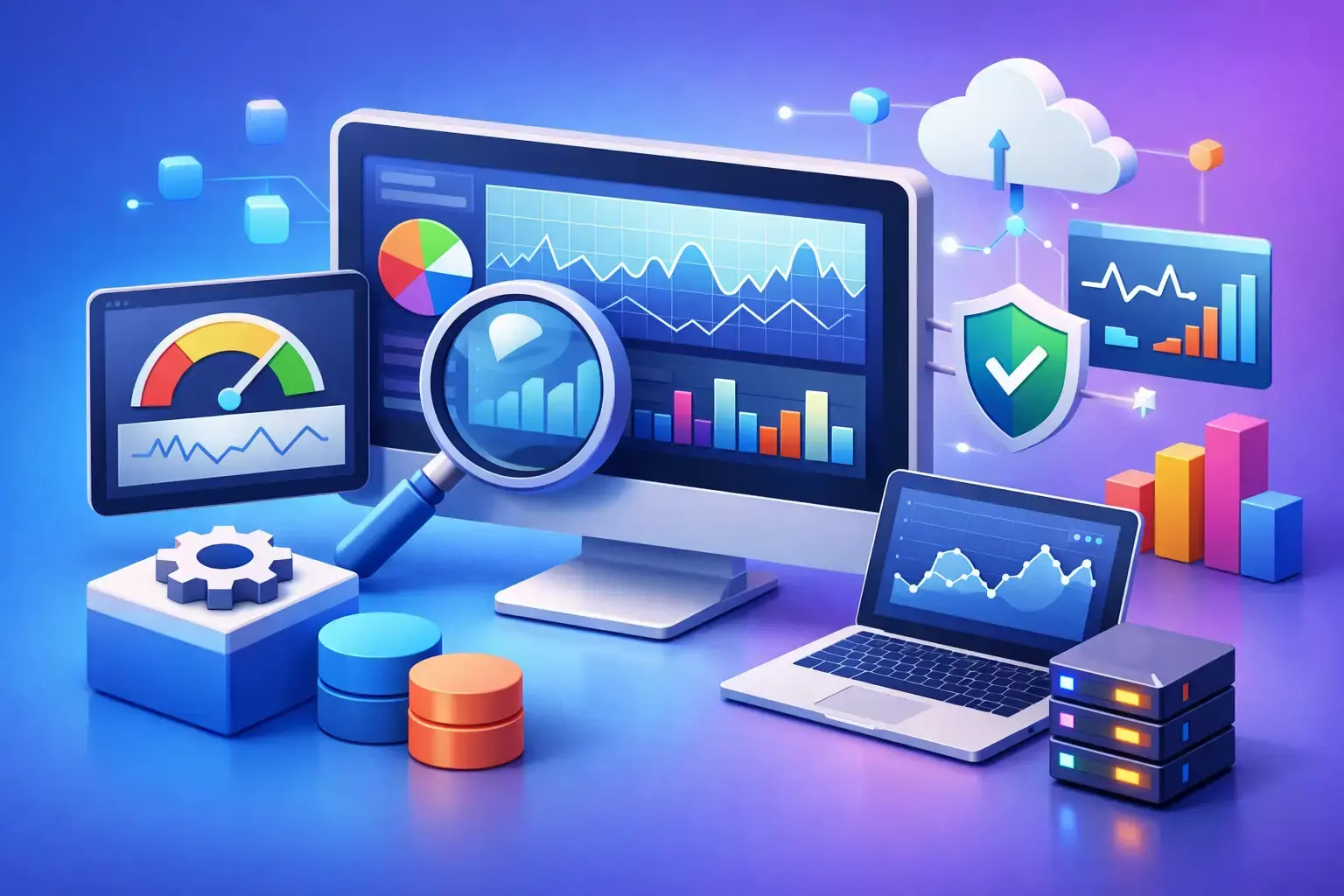
At a minimum, application performance monitoring tools should show how an application behaves from the user layer down to the infrastructure layer. That means response times, error rates, throughput, service dependencies, database performance, and resource utilization should all be visible in one operating picture.
That sounds straightforward until you look at a modern environment. A single business transaction might pass through a web app, an API gateway, several microservices, a managed database, a queue, and one or more external SaaS services. If your monitoring platform only tells you that CPU is high on one host, it is not doing enough. Teams need distributed tracing, log correlation, and alerting that reflect actual service impact.
The strongest platforms also help answer business-critical questions quickly. Is this problem isolated or widespread? Did the last deployment cause it? Is latency coming from code, infrastructure, or a third-party dependency? Are users in one region affected more than others? If your team has to assemble those answers from five disconnected systems, incident response will stay slower than it should be.
Why does tool selection get expensive when requirements are vague
A common mistake is buying based on feature volume instead of operating fit. Large enterprise platforms can be impressive, but they can also come with heavy licensing costs, complex implementation work, and dashboards that few people actually use. On the other side, lightweight tools may look cost-effective at first and then fall short as your environment becomes more distributed.
The right choice depends on your architecture, team maturity, compliance needs, and incident patterns. A startup running a single SaaS application on AWS may prioritize fast setup and clear traces. A multi-entity business with hybrid infrastructure and compliance obligations may need stronger retention, role-based access controls, auditability, and tighter integration with existing operations.
This is where evaluation should start with business and operational requirements, not vendor demos. If uptime, transaction speed, and release confidence are core business metrics, then the monitoring platform needs to support those outcomes directly.
Key capabilities to evaluate in application performance monitoring tools
The first capability to examine is end-to-end visibility. You should be able to trace a request across services without guessing where the delay was introduced. For cloud-native stacks, this usually means support for containers, Kubernetes, serverless functions, and managed cloud services.
The second is correlation. Metrics alone rarely explain incidents. Logs alone create noise. Traces alone show only part of the picture. Good platforms connect these data types so engineers and IT leaders can move from symptom to cause quickly.
Alert quality matters just as much as data quality. If your platform creates too many low-value alerts, your team will start ignoring the important ones. Look for alerting based on service health, anomaly detection, baseline behaviour, and dependency impact rather than static thresholds everywhere.
Deployment visibility is another deciding factor. In fast-moving environments, teams need to know whether a new release changed latency, error rate, or infrastructure behaviour. CI/CD-aware monitoring shortens mean time to resolution because it puts code changes and performance regressions in the same conversation.
Usability should not be treated as a soft requirement. A platform may be technically capable and still fail if it requires specialized administration just to answer everyday questions. The best monitoring tools reduce friction for engineers, operations teams, and decision-makers alike.
Cloud and hybrid environments change the evaluation criteria
If your environment runs fully in one cloud account with a small number of services, many tools will appear capable. Complexity rises quickly once you add multiple AWS accounts, hybrid connectivity, edge locations, SaaS dependencies, or acquisition-driven infrastructure sprawl.
In these environments, context becomes more valuable than raw telemetry. You need to see how applications interact with cloud resources, how network paths affect performance, and whether infrastructure drift or configuration changes are contributing to instability. Monitoring should support operational decisions, not just produce charts.
This is also where vendor neutrality matters. Some cloud-native monitoring services work well inside their own ecosystem but become less useful in mixed environments. That does not make them bad tools. It means they may be excellent for a narrow scope and weak for broader observability goals. If you expect your architecture to evolve, choose with that future state in mind.
Cost is not just the license
Pricing models for monitoring platforms can become complicated fast. Some charge by host, some by user, some by ingested data volume, and others by traces or events. What looks affordable in a pilot can become expensive in production, especially when log growth and tracing volume increase.
The larger cost issue is operational overhead. A lower-cost platform that takes significant engineering time to maintain, tune, and explain can end up costing more than a higher-priced option with better automation and cleaner workflows. The opposite is also true. Paying for advanced features your team will not use is not a strategic investment. It is a waste.
A practical evaluation includes a six- to twelve-month view of data growth, service expansion, compliance retention needs, and staffing realities. If the tool requires constant care from a senior engineer, make sure that the cost is visible during selection.
Implementation matters more than most teams expect
Even strong tools underperform when implementation is shallow. Instrumentation gaps, poor naming conventions, weak alert thresholds, and unclear service maps can leave teams with a platform that technically works but does not improve response times or release confidence.
A good rollout starts with priority services and known business-critical transactions. From there, teams should define what success looks like. That could mean reducing mean time to detect, lowering alert fatigue, improving deployment confidence, or gaining visibility into specific customer-facing workflows.
It also helps to align monitoring with operational ownership. If nobody owns dashboards, alerts, and response playbooks, the platform becomes shelfware. The best results come when monitoring is tied directly to incident response, change management, and infrastructure optimization.
For organizations modernizing on AWS or operating across cloud and on-prem environments, this work often benefits from a partner that can connect architecture, observability, security, and automation into one operating model. That is where firms like Advanced Vision IT can add value beyond tool deployment alone.
Common mistakes when comparing platforms
One mistake is assuming more dashboards mean better visibility. Most teams do not need more screens. They need clearer signals tied to business services and operational priorities.
Another is evaluating only for engineering use cases. Performance issues affect support teams, operations leaders, and executives when they become visible to customers. Reporting and service-level visibility should support those stakeholders, too.
A third mistake is ignoring integration requirements. Your monitoring platform should fit your ticketing workflow, incident process, infrastructure tooling, and deployment pipeline. If it sits off to the side, adoption will weaken.
Finally, teams often underestimate change management. New monitoring can expose long-standing issues in architecture, ownership, and release discipline. That is a good thing, but it does require leadership support and realistic rollout planning.
What a strong decision process looks like
Start by identifying your most critical applications and the transactions that matter most to users and revenue. Then define the questions your team needs answered during an incident, after a deployment, and during capacity planning.
From there, test shortlisted tools in a real environment, not a polished demo. Use a meaningful service, send real traffic, and evaluate how quickly teams can detect a problem, isolate the cause, and communicate impact. That practical test will tell you more than a feature matrix ever will.
The right platform is the one your team can trust under pressure. Not the one with the longest feature list, and not the one that wins on price alone. When application performance monitoring tools are selected with architecture, operations, and business risk in mind, they stop being another software subscription and start becoming part of how you protect uptime, customer experience, and growth.
Choose the tool that helps your team see clearly, act quickly, and scale without guessing.
FAQ
1. What are application performance monitoring (APM) tools?
Application performance monitoring (APM) tools provide visibility into how applications perform across the entire stack, from user experience to infrastructure. They help teams track response times, error rates, dependencies, and system health to quickly detect and resolve issues.
2. Why is choosing the right APM tool important?
Selecting the right APM tool ensures that teams can identify performance issues early, reduce downtime, and improve user experience. A poor choice can lead to excessive alerts, limited visibility, and higher operational costs.
3. What key features should you look for in APM tools?
Important features include end-to-end visibility, distributed tracing, log and metric correlation, intelligent alerting, and deployment tracking. These capabilities help teams move faster from issue detection to root cause analysis.

Written by Yavor Y. Zlatev
CEO & Founder at Advanced Vision IT Ltd | Published on
Yavor advises executive leadership teams on cybersecurity strategy, NIS2 compliance, and cloud operating models to build resilient IT environments.