



Vulnerability Scanning Tools That Support Real Security
A critical vulnerability is not automatically a business emergency. A critical vulnerability on an internet-facing production workload, tied to customer data and no compensating controls, is. That distinction is why vulnerability scanning tools must do more than generate a long list of CVEs. For growing businesses, the right program connects asset visibility, technical context, remediation ownership, and verification.
Security teams rarely struggle to find vulnerabilities. They struggle to determine which findings matter first, who owns the fix, whether a patch can be deployed safely, and whether the change actually closed the exposure. Effective scanning turns that uncertainty into a repeatable operational process.
What vulnerability scanning tools should deliver
Vulnerability scanning tools identify known weaknesses across systems, applications, cloud services, containers, and network devices. Depending on the platform, they can detect missing patches, insecure configurations, exposed services, weak encryption settings, unsupported software, and vulnerable open-source components.
The value comes from more than detection. A useful tool should establish a reliable inventory of what exists, identify where it is exposed, enrich findings with threat and business context, and provide evidence that remediation occurred. Without those capabilities, teams often receive reports that look thorough but produce little measurable risk reduction.
For a small or midsize organization, this matters because the environment changes quickly. New AWS accounts, virtual machines, SaaS integrations, developer tools, remote endpoints, and CI/CD pipelines can all create assets that fall outside the original security scope. A monthly scan of a static server list will not keep pace with that change.
Discovery is the first security control
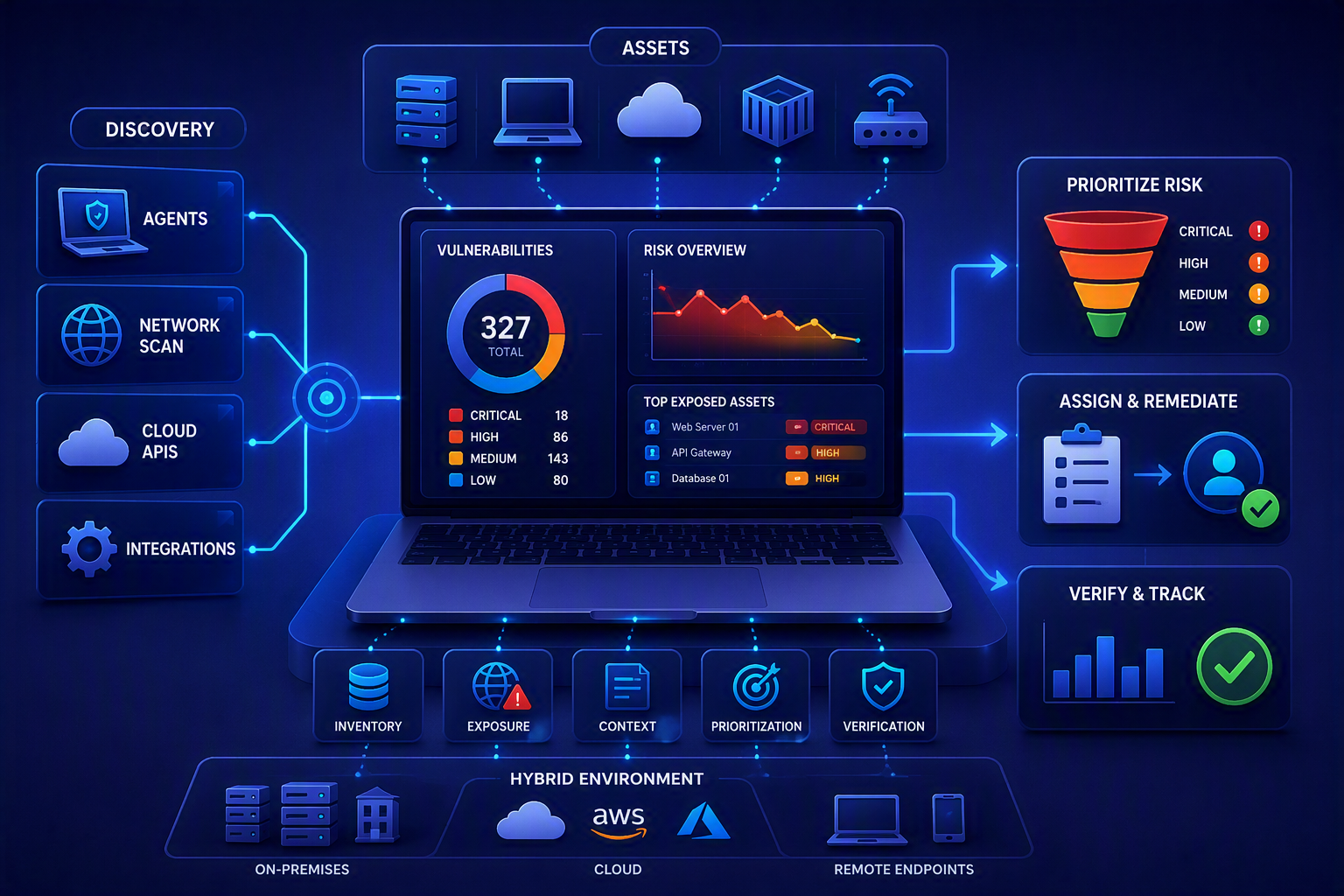
A scanner can only assess assets it knows about. Start by defining how the platform will discover endpoints, cloud resources, public IP ranges, containers, and application workloads. In hybrid environments, that usually means combining network discovery with agents, cloud APIs, and integrations with endpoint management or configuration management systems.
Agent-based scanning provides deeper visibility into installed software, local configurations, and patch status, even when devices are off the corporate network. Network scanning can identify unmanaged systems and exposed services that agents miss. Cloud-native integrations add a different layer of value by monitoring new resources as infrastructure changes.
No single approach is sufficient in every environment. Agents may be impractical for legacy appliances. Network scans may have limited visibility into encrypted traffic or ephemeral cloud workloads. The right design uses overlapping coverage where the risk justifies it, then documents known blind spots rather than assuming the dashboard is complete.
How to evaluate vulnerability scanning tools
Tool selection should follow the environment and operating model, not a feature checklist alone. A platform that performs well for traditional on-premises Windows and Linux servers may not be the best fit for an AWS-first organization running containers and short-lived workloads.
Assess candidates against four operational questions:
- Can the tool discover and continuously assess the assets you actually operate, including remote endpoints, cloud workloads, containers, and network devices?
- Does it support authenticated scanning, agent deployment, API integrations, and role-based access appropriate for your environment?
- Can it prioritize findings using exploit activity, internet exposure, asset criticality, and compensating controls rather than CVSS scores alone?
- Does it integrate with ticketing, SIEM, endpoint management, and DevOps workflows so remediation does not depend on manually forwarding reports?
Platforms such as Tenable, Qualys, Rapid7, Greenbone, and AWS Inspector solve different parts of the problem with different strengths. AWS Inspector, for example, is a strong option for organizations that need native visibility into supported AWS workloads and container images. A broader platform may be necessary when the estate includes on-premises infrastructure, multiple cloud providers, remote employee devices, and specialized network equipment.
Cost deserves a practical review as well. Licensing can be based on assets, agents, IP addresses, cloud workloads, or modules. The least expensive subscription is not necessarily the lowest-cost program if it requires manual exports, duplicate data entry, or extensive administration. Evaluate the time required to maintain asset groups, tune false positives, manage credentials, and deliver remediation reporting.
Prioritization must reflect real exposure
CVSS is useful, but it is not a complete remediation strategy. A high score does not tell you whether the vulnerable service is reachable from the internet, whether an exploit is active, whether the affected asset processes sensitive data, or whether existing controls materially reduce the risk.
A mature program adds context. An exposed vulnerability with known exploitation activity on a production identity system should rise quickly. A similar finding on an isolated development server may be scheduled differently, provided that isolation is real and verified. Asset owners should also be able to classify systems by business service, data sensitivity, operational tier, and recovery requirements.
This is where security operations and infrastructure operations must work together. The security team needs accurate asset and exposure data. The infrastructure team needs remediation requests that identify the affected package, host, owner, deadline, and business reason for action. Vague directives to "patch critical findings" create disruption without creating accountability.
Build scanning into operational workflows
Scanning should run on a predictable cadence, but cadence alone is not enough. Internet-facing infrastructure and cloud workloads often need continuous or near-continuous assessment. Internal systems may be scanned weekly or monthly based on risk, maintenance windows, and change velocity. New assets should be assessed before production use whenever possible.
Authenticated scans are generally more accurate than unauthenticated scans because they can inspect installed packages and local configuration. They also require careful credential management. Use least-privilege service accounts, protect secrets in an approved vault, monitor scanner access, and test credentialed scanning after operating system or identity changes.
For cloud and DevOps teams, move detection earlier where it makes sense. Scan container images in the build pipeline, assess infrastructure-as-code for insecure configurations before deployment, and monitor cloud resources after deployment for drift. Pre-production controls reduce the number of issues that reach production, while runtime scanning validates the environment that actually exists.
Remediation should be managed through defined service levels. For example, a confirmed, externally exploitable critical finding on a production asset may require action within hours or days, while lower-risk internal findings can follow a planned patch cycle. The exact targets depend on the organization, regulatory obligations, maintenance constraints, and available compensating controls.
Exceptions are sometimes necessary. A patch may conflict with a line-of-business application, or a legacy system may not support an upgrade. Treat exceptions as time-bound risk decisions, not permanent report suppressions. Document the business owner, rationale, compensating controls, expiration date, and review date. That record is valuable for leadership and for compliance reviews.
Avoid the common failure modes
The most common scanning failure is confusing coverage with security. A dashboard showing thousands of findings can indicate good detection, poor patch hygiene, inadequate prioritization, or all three. Focus reporting on meaningful measures: assets covered, overdue critical exposures, time to remediate by severity, exceptions approaching expiration, and recurring vulnerability categories.
Another failure is scanning production systems without testing the impact. Most modern scanners are designed to be safe, but aggressive checks, fragile legacy services, constrained network links, and poorly timed scans can still affect operations. Start with controlled scope, coordinate with application owners, use maintenance windows when appropriate, and tune scan policies as the environment changes.
Finally, avoid treating vulnerability management as a security-only responsibility. Engineering owns code and images. IT owns endpoint and server operations. Cloud teams own infrastructure configurations. Business leaders accept or fund risk decisions. The scanning platform should give each group actionable views while preserving a central record of accountability.
Turning findings into lower risk
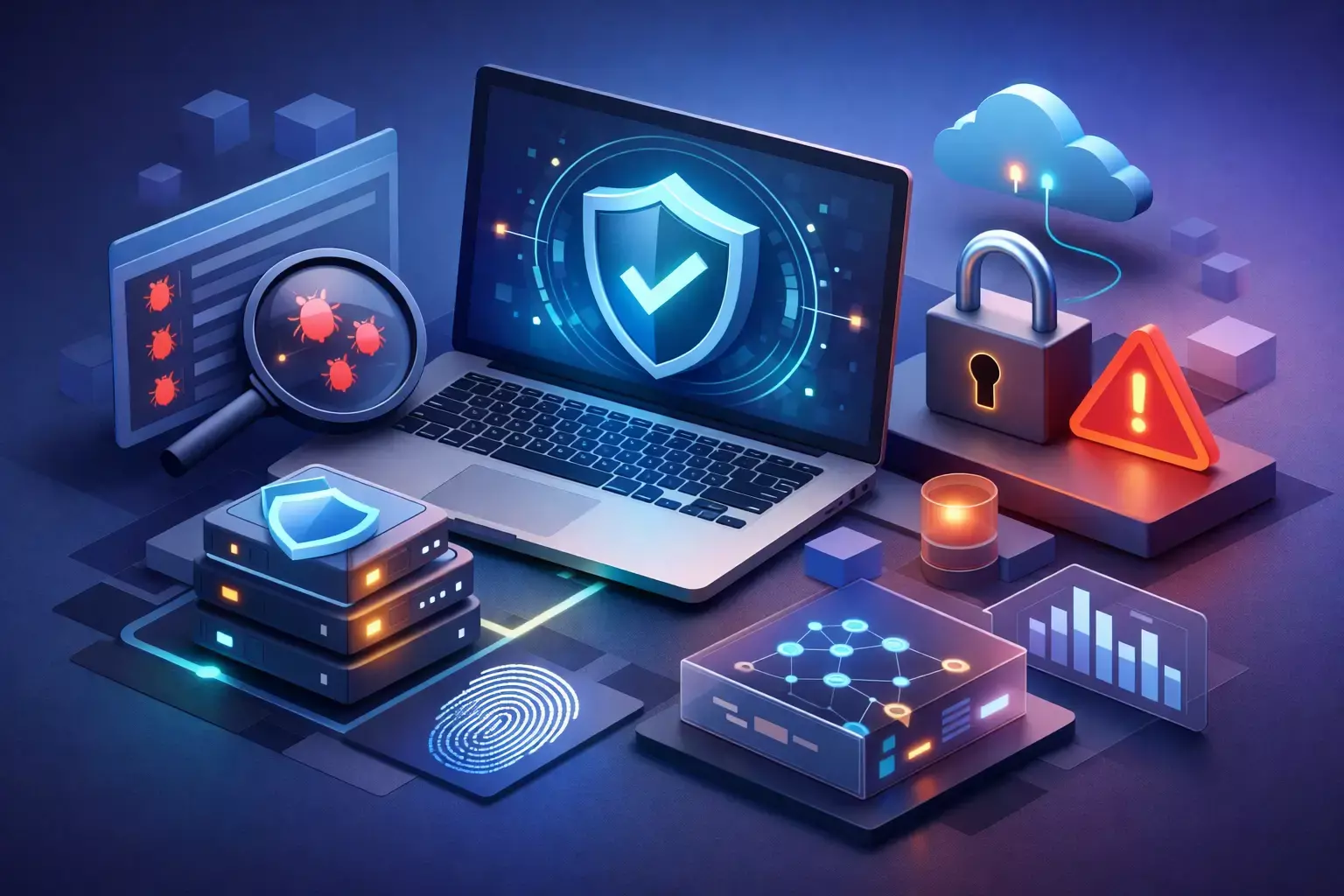
The best vulnerability scanning tools fit into the way your organization builds, deploys, and supports technology. They make unknown assets visible, help teams focus on exploitable exposure, and produce evidence that remediation is progressing. They do not replace patch management, secure architecture, monitoring, backups, or incident response. They make each of those controls more informed.
Advanced Vision IT helps organizations align cloud security, managed infrastructure, and remediation workflows across AWS and hybrid environments. The goal is not a louder stream of alerts. It is a defensible, sustainable process that reduces exposure without slowing the business.
Start with the assets that would cause the greatest disruption if compromised, verify what the scanner can truly see, and make remediation ownership explicit. That is how vulnerability management becomes part of reliable operations rather than another report waiting for review.
User Story: From Thousands of Findings to a Clear Remediation Plan
A regional healthcare services provider had invested in vulnerability scanning and was receiving regular reports containing thousands of findings across on-premises servers, remote endpoints, and AWS workloads. While the security team had visibility into vulnerabilities, they struggled to determine which issues required immediate attention and which could be addressed during scheduled maintenance windows.
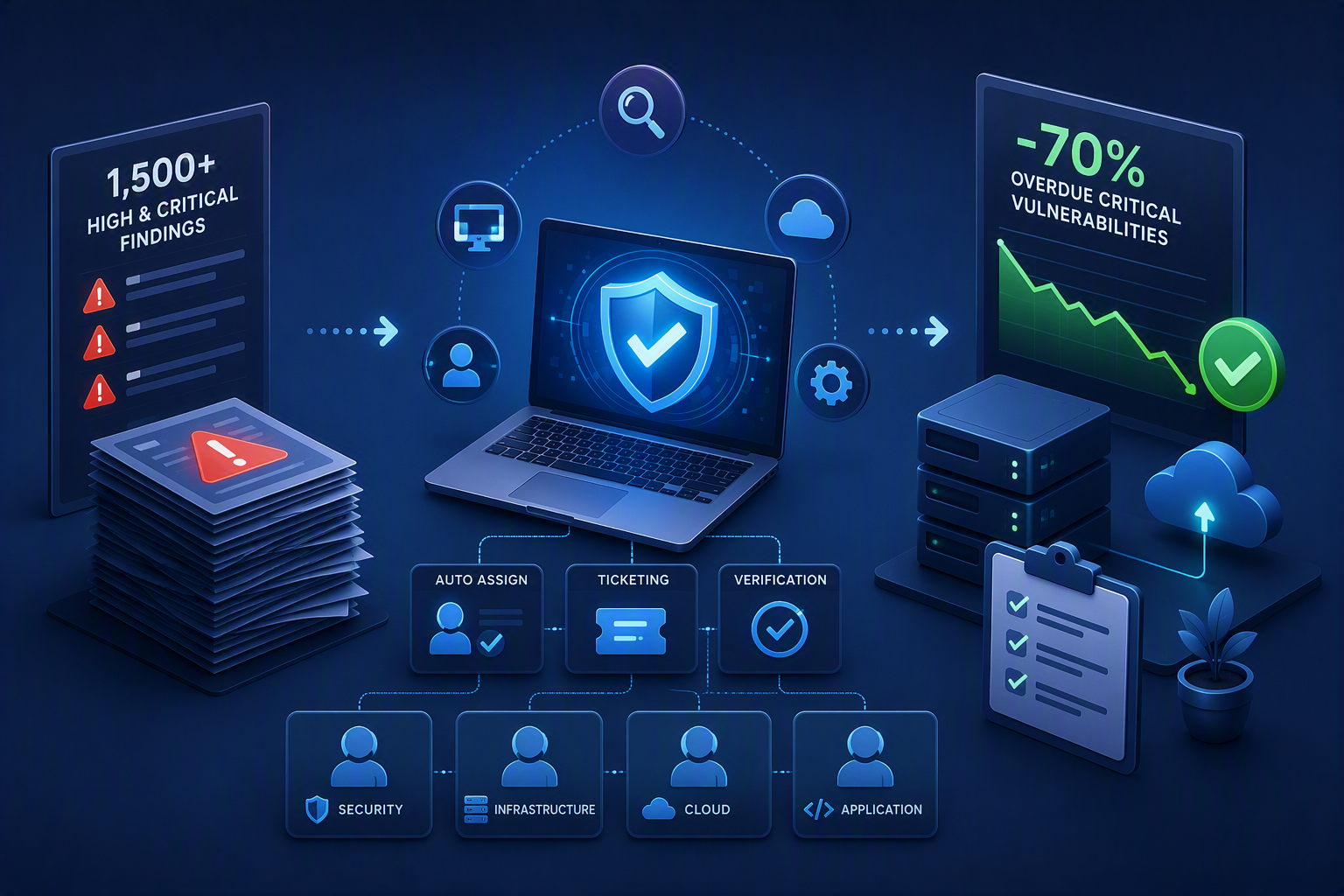
One monthly scan identified more than 1,500 high and critical vulnerabilities. Leadership was concerned by the volume, but the report did not explain which findings represented actual business risk. After reviewing the data, the team discovered that only a small percentage of those vulnerabilities were associated with internet-facing systems handling sensitive patient information.
By implementing continuous asset discovery, authenticated scanning, cloud integrations, and risk-based prioritization, the organization was able to focus remediation efforts on the exposures that mattered most. Vulnerabilities affecting externally accessible applications were automatically assigned to system owners, integrated into ticketing workflows, and verified after remediation.
Within six months, the organization reduced overdue critical vulnerabilities by more than 70%, improved remediation accountability across IT and engineering teams, and gained clearer visibility into newly deployed cloud resources. Most importantly, the security team stopped spending time sorting through lengthy reports and started managing vulnerability remediation as a measurable operational process.
The lesson was straightforward: visibility alone does not reduce risk. Consistent ownership, prioritization, and verification do.
Why This Matters
Vulnerability management is often viewed as a technical security function, but its impact reaches far beyond the security team. Every unmanaged vulnerability represents a potential business interruption, data breach, compliance issue, or reputational risk.
Effective vulnerability scanning matters because it helps organizations:
- Identify critical exposures before attackers exploit them.
- Maintain visibility into rapidly changing hybrid and cloud environments.
- Reduce the time between discovering a vulnerability and fixing it.
- Improve collaboration between security, infrastructure, cloud, and application teams.
- Demonstrate due diligence during audits, compliance assessments, and customer security reviews.
- Prioritize resources on the vulnerabilities that create the greatest business risk instead of chasing every alert.
- Build measurable, repeatable security processes that scale as the organization grows.
For growing businesses, the challenge is rarely a lack of security data. The challenge is converting that data into decisions and actions. A mature vulnerability scanning program transforms security findings into operational accountability, helping organizations reduce risk without slowing innovation or daily operations.
Frequently Asked Questions (FAQ)
1. How often should vulnerability scans be performed?
The appropriate frequency depends on the environment and risk profile. Internet-facing systems and cloud workloads often benefit from continuous or near-continuous assessment, while internal systems may be scanned weekly or monthly. New assets should ideally be scanned before entering production.
2. What is the difference between authenticated and unauthenticated scanning?
Authenticated scanning uses approved credentials to inspect installed software, system configurations, and patch status from within the operating system. Unauthenticated scanning evaluates systems from an external perspective. Authenticated scans typically provide more accurate and actionable results.
3. Is a high CVSS score enough to prioritize remediation?
No. While CVSS provides a useful measure of technical severity, organizations should also consider exploit activity, internet exposure, asset criticality, data sensitivity, compensating controls, and business impact. Two vulnerabilities with identical CVSS scores may present very different levels of risk.
4. Can vulnerability scanning replace patch management?
No. Vulnerability scanning identifies weaknesses and verifies remediation, but it does not replace patch management, configuration management, monitoring, backup strategies, secure architecture, or incident response processes. These controls work together to reduce overall risk.
5. What should organizations measure to evaluate vulnerability management effectiveness?
Key performance indicators typically include asset coverage, number of overdue critical vulnerabilities, mean time to remediate (MTTR), remediation completion rates, exception review status, recurring vulnerability trends, and the percentage of assets continuously monitored. These metrics provide a clearer picture of risk reduction than raw vulnerability counts alone.

Written by Yavor Y. Zlatev
CEO & Founder at Advanced Vision IT Ltd | Published on
Yavor advises executive leadership teams on cybersecurity strategy, NIS2 compliance, and cloud operating models to build resilient IT environments.